What Is a Cast-Iron Gate Valve? Construction, BB/EE/FF/BE Types and How to Choose Correctly
A gate valve is used to fully open or close the flow in a water supply pipeline – unlike butterfly or globe valves, it is not meant for flow regulation. It is the most common valve type in urban water supply, fire protection, and industrial systems, but not all gate valves are built the same. This article takes a close look at construction, connection types, applicable standards, and how to choose the right type for real installation situations.
Construction of a Standard Cast-Iron Gate Valve
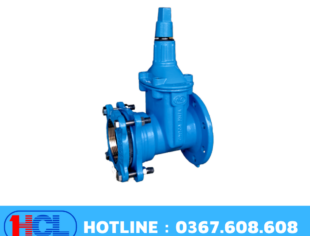
The quality of a cast-iron gate valve lies not just in its outer shell but in every internal component:
- Body and bonnet: ductile iron FCD450 (equivalent to GJS-500-7) – a grade of iron with far better tensile strength and elongation than ordinary gray iron, able to withstand water pressure and impact during transport and installation.
- Disc (gate): a cast-iron core fully coated in EPDM rubber. The rubber coating provides an absolutely tight seal when closed, unlike bare metal discs which are prone to leaking over time due to corrosion or scale buildup.
- Valve stem: stainless steel SS420, able to withstand torsion through thousands of open/close cycles without thread wear.
- Disc nut/wedge: POM plastic, reducing friction between the disc and body during operation for smoother handling.
- Stem bushing, stem collar, disc nut thread: brass. These components bear direct friction, so brass is used instead of standard plastic to extend service life.
- Outer coating: epoxy paint, minimum 250 microns thick, resistant to corrosion when buried underground or installed in a damp valve pit for long periods.
One detail many people overlook: for gate valves DN250 and above, it is best to choose a version with a bearing at the stem collar. The larger the diameter, the greater the friction when turning the stem – a bearing makes operation noticeably lighter and reduces long-term thread wear.
Classification by Connection Type: BB, EE, FF, BE, BF
This is the part most installers tend to confuse, since the codes look similar but mean very different things:
| Code | Meaning | Connection Type | Used For |
|---|---|---|---|
| BB | Flange – Flange | Flanged on both ends | Cast-iron or steel pipe with existing flanges |
| EE / FF | Compression fitting – Compression fitting | Brass compression grips on both ends, clamped directly onto the pipe | HDPE pipe |
| BE / BF | Flange – Compression fitting | One flanged end, one brass compression end | Transition between cast-iron/steel pipe and HDPE pipe |
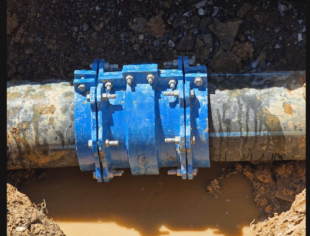
A key point when choosing between the BB version and the EE/FF version for HDPE pipe: the EE/FF version is installed directly onto the pipe, without a separate compression coupling. Compared to the older method using a brass gate valve (which requires two separate compression couplings at both ends), an EE/FF valve assembly has only 2 connection points instead of 4. Fewer joints means lower leak risk over time – especially important for buried locations that are difficult to access for repairs.
For the low-profile EE/FF gate valve (used specifically for HDPE pipe), the body height is fixed by standard: DN40 is 215mm tall, DN50 is 220mm tall – figures worth knowing precisely when calculating valve pit depth or pipe trench dimensions.
Applicable Standards
HCL’s ATK cast-iron gate valves are manufactured to the following standards, depending on connection type:
- ISO 7259:1988 / TCVN 9445:2013 – the primary standard for T-handwheel ductile iron gate valves, covering DN50-300. Certificate of conformity No. SP 3546.24.17 issued by QUACERT, valid from April 8, 2024 to April 7, 2027.
- BS EN 1074-1 – the European standard for valves used in water supply systems, applicable to the BE version.
- ANSI/AWWA C509-1 – the US standard, applicable to the BB version on the ANSI flange system, covering DN50-700 (a notably wider range than the standard ISO version).
- BS EN 558-14 – specifies the face-to-face distance between the two flanges (valve body length), ensuring valves from different manufacturers remain interchangeable when built to the same standard.
The entire product range is rated PN16 (nominal working pressure of 16 bar) with a maximum working water temperature of 70°C – sufficient for most domestic water supply, fire protection, and light industrial applications.
How to Choose the Right Gate Valve for Your Project
A few practical principles when advising on valve selection:
- Identify the pipe type first: cast-iron/steel pipe with existing flanges calls for BB; HDPE pipe calls for EE/FF to minimize connection points; a transition between the two pipe types calls for BE/BF.
- DN250 and above: prioritize the version with a stem-collar bearing for lighter, longer-lasting operation.
- Projects built to US standards (FDI projects, plants with foreign consultants): choose the BB version to ANSI/AWWA C509-1 rather than the standard ISO version, since the flange system and reference pressure range differ.
- Locations that are difficult to access for repair (deeply buried, under a sidewalk): prioritize minimizing the number of connection points by choosing the EE/FF/BE/BF type that matches the existing pipe, rather than using a separate compression coupling.
HCL’s ATK cast-iron gate valves meet the standards above, are manufactured at the Quat Dong factory (Hanoi), and carry a 5-year warranty. For help choosing the right valve type for your specific project, please contact HCL for support based on your actual pipeline specifications and installation conditions.